Flooring plays a foundational role in any space, influencing not only aesthetics but also comfort, durability, and long-term maintenance. While design and cost are often the primary considerations, climate is an equally important factor that is frequently overlooked.
Different regions experience varying environmental conditions such as extreme heat, high humidity, or cold temperatures. These factors directly impact how flooring materials behave over time. A surface that performs exceptionally well in one climate may deteriorate quickly in another.
This guide provides a detailed understanding of how to select flooring based on climatic conditions, ensuring both performance and longevity.
Understanding the Impact of Climate on Flooring
Every flooring material reacts differently to environmental exposure:
- Heat can cause expansion and fading
- Moisture can lead to swelling, mold, or structural weakening
- Cold temperatures can make surfaces brittle or uncomfortable
Ignoring these factors often results in premature wear, higher maintenance costs, and reduced lifespan of the flooring.
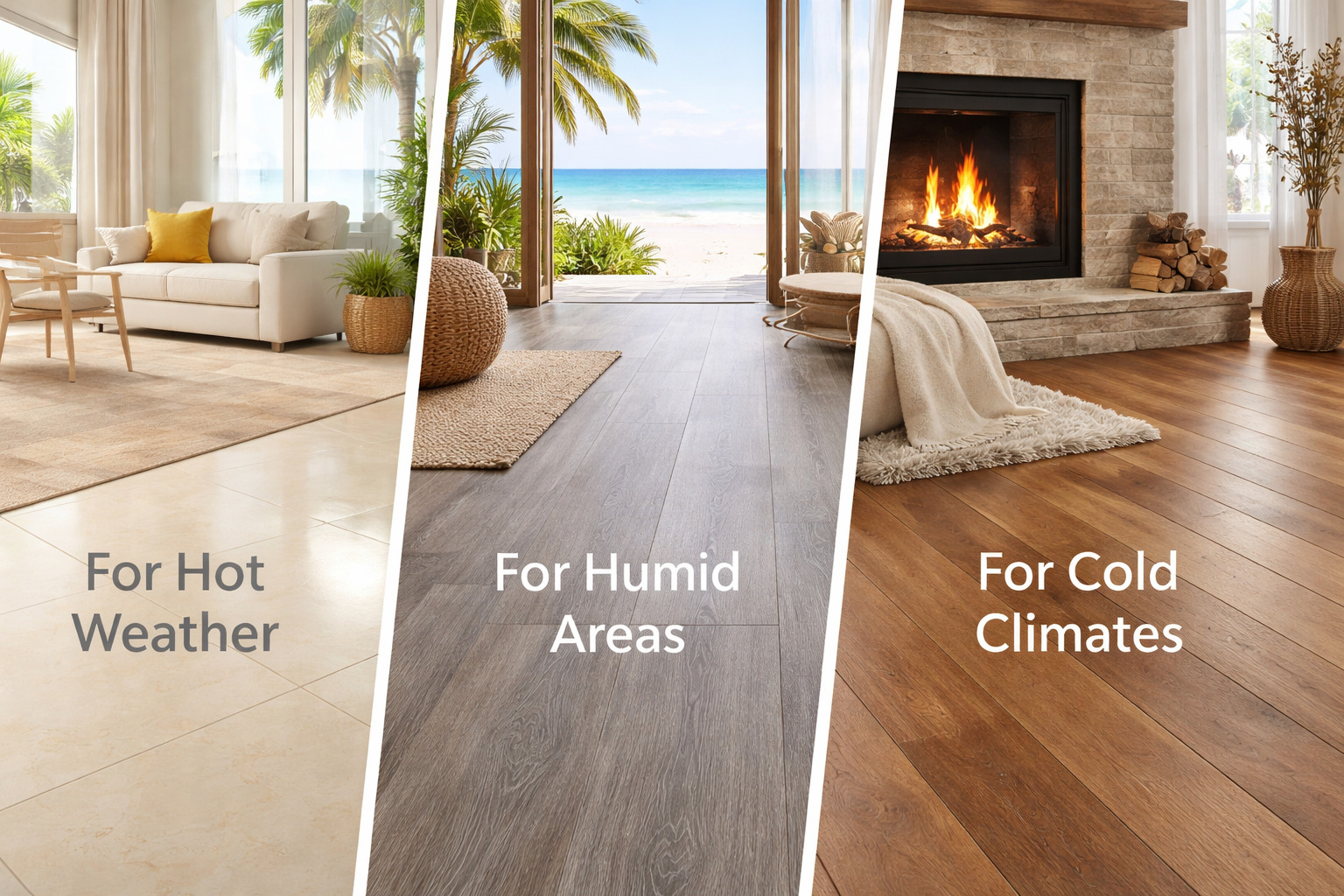
Flooring Solutions for Hot Climates
Regions with consistently high temperatures require flooring that remains stable and does not absorb excessive heat.
Recommended Materials
1. Vitrified Tiles
Vitrified tiles are one of the most reliable options for hot climates. Their low porosity and high durability make them resistant to heat and surface damage. They also retain a relatively cool surface, which enhances indoor comfort.
2. Ceramic Tiles
Ceramic tiles are widely preferred due to their affordability and ease of maintenance. They do not warp under heat and are available in a wide range of finishes suitable for modern interiors.
3. Natural Stone (Marble, Granite)
Natural stones offer excellent thermal resistance and remain naturally cool. They are particularly suitable for premium residential and commercial spaces.
Design Considerations
- Opt for lighter shades to reflect heat
- Use larger tiles to reduce grout lines and heat absorption
- Ensure proper installation to avoid cracks due to expansion
Flooring for Humid and Coastal Regions
Moisture is the biggest challenge in humid climates. Flooring must be resistant to water absorption and should not support mold or fungal growth.
Recommended Materials
1. SPC Flooring (Stone Plastic Composite)
SPC flooring has emerged as a highly effective solution for moisture-prone areas. Its rigid core structure and waterproof properties make it ideal for kitchens, basements, and coastal regions.
2. Porcelain Tiles
Porcelain tiles are dense and have very low water absorption rates. They are durable, easy to maintain, and suitable for both residential and commercial applications.
3. Quartz Surfaces
Quartz is non-porous and highly resistant to moisture. It is particularly effective for areas like kitchens and bathrooms where hygiene and durability are critical.
Materials to Avoid
- Solid wood flooring
- Low-quality laminates
- Porous stones without proper sealing
Practical Tips
- Ensure proper ventilation
- Use anti-skid finishes in wet areas
- Focus on materials with low maintenance requirements
Flooring for Cold Climates
Cold environments demand flooring that can provide comfort while maintaining structural integrity under temperature variations.
Recommended Materials
1. Engineered Wood Flooring
Engineered wood offers better dimensional stability compared to solid wood. It adapts well to temperature changes while providing a warm and comfortable surface.
2. SPC Flooring
SPC flooring performs consistently across temperature fluctuations. It does not expand or contract significantly, making it suitable for colder regions.
3. Carpet (Selective Use)
Carpet can be used in specific areas like bedrooms to enhance warmth and comfort, although it requires higher maintenance.
Design Considerations
- Incorporate insulation layers beneath flooring
- Choose materials that retain warmth
- Avoid overly hard and cold surfaces in living areas
Key Decision Factors
When selecting flooring based on climate, consider the following:
- Durability under environmental stress
- Resistance to water and temperature changes
- Ease of maintenance
- Long-term cost efficiency
A well-informed decision not only enhances performance but also reduces future repair and replacement costs.
Expert Perspective
Modern design practices increasingly favor a combination of materials rather than relying on a single solution. For example:
- Using SPC flooring in moisture-prone areas
- Incorporating tiles or stone in high-temperature zones
This approach ensures optimal performance across different parts of a property.
Conclusion
Climate-responsive flooring is essential for achieving durability, comfort, and long-term value. By selecting materials that align with environmental conditions, property owners can significantly enhance the lifespan and functionality of their spaces.
Investing in the right flooring today ensures fewer complications and better performance in the years ahead.