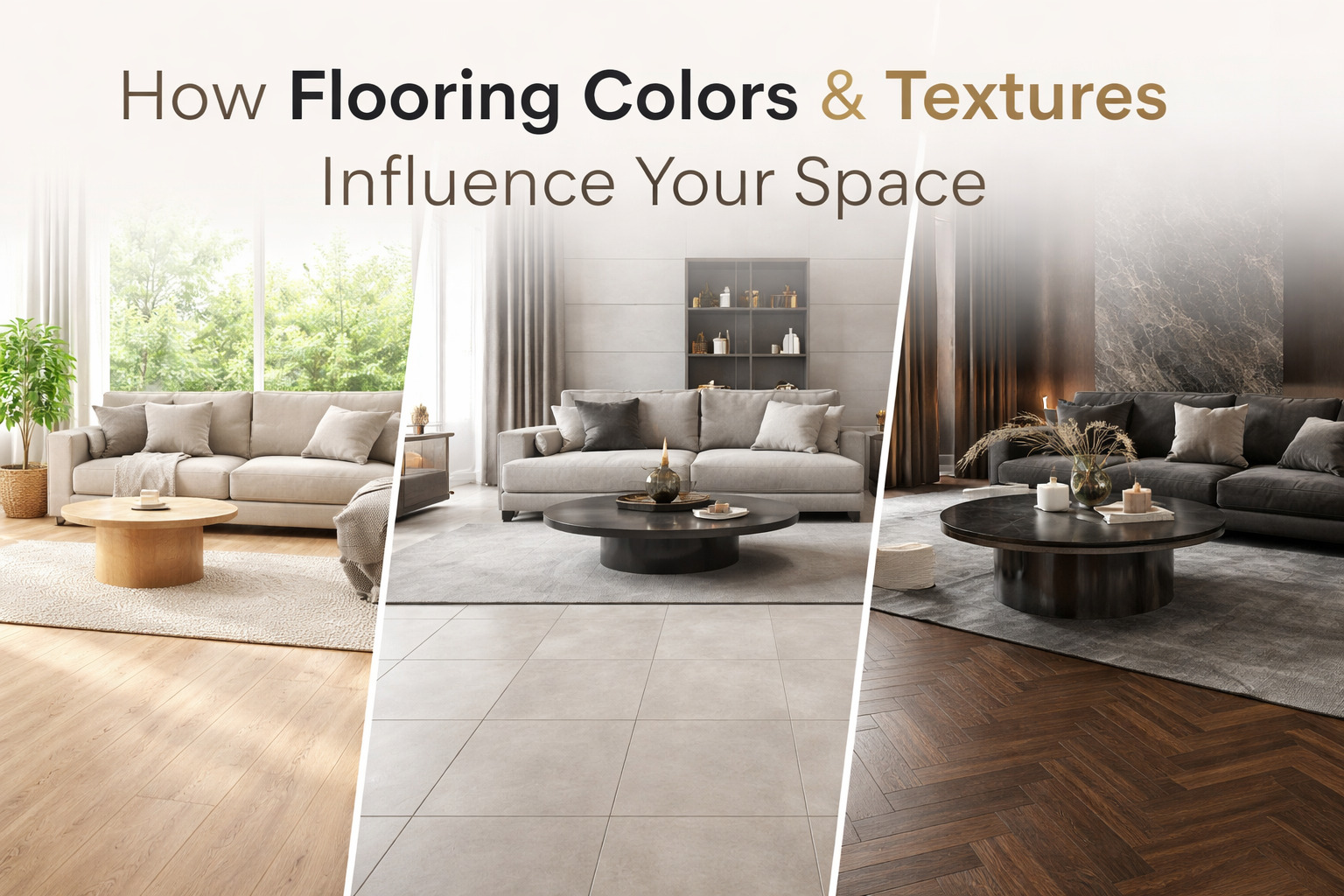
Flooring is one of the most influential design elements in any interior environment. Beyond its functional role, it significantly impacts how a space is perceived in terms of size, brightness, warmth, and overall ambiance.
The choice of color, texture, and finish can subtly alter the psychological experience of a space. Understanding these effects allows homeowners, designers, and architects to create environments that are not only visually appealing but also emotionally comfortable.
The Role of Color in Spatial Perception
Color is a powerful visual tool that can change how a room is experienced.
Light-Colored Flooring
Light shades such as white, beige, and soft grey are widely used to create a sense of openness. They reflect natural and artificial light, making spaces appear larger and more inviting.
These colors are particularly effective in:
- Compact apartments
- Offices with limited natural light
- Minimalist interior designs
Dark-Colored Flooring
Dark tones such as deep brown, charcoal, and black introduce depth and sophistication. They create a strong visual contrast and are often associated with luxury interiors.
However, they are best suited for:
- Larger spaces
- Well-lit areas
- Feature zones
Neutral and Natural Tones
Wood-inspired and earthy shades strike a balance between light and dark tones. They offer versatility and blend seamlessly with various design styles.
These tones are ideal for:
- Living rooms
- Bedrooms
Contemporary and traditional interiors
Importance of Texture and Finish
The surface finish of flooring plays a critical role in both aesthetics and functionality.
Glossy Finish
Glossy surfaces reflect light effectively, enhancing brightness and creating a polished appearance. They are suitable for modern interiors but require regular maintenance to keep them clean.
Matte Finish
Matte finishes offer a subtle and refined look. They are less prone to visible dust and scratches, making them practical for high-traffic areas.
Textured Surfaces
Textured flooring adds depth and character while also improving grip and safety. It is particularly useful in areas exposed to moisture or heavy use.
Impact on Space Perception
Flooring choices can visually alter the dimensions of a room:
- Large-format tiles create a seamless and expansive look
- Continuous flooring across rooms enhances spatial flow
- Patterns and contrasts can define specific zones
Careful selection ensures that the flooring complements the overall layout and purpose of the space.
Psychological Influence
Different flooring choices evoke different emotional responses:
- Light tones create a sense of calm and clarity
- Dark tones evoke warmth and sophistication
- Natural textures promote comfort and relaxation
These subtle effects contribute to how people experience and interact with a space.
Practical Application
To achieve the best results:
- Use lighter tones in smaller areas
- Incorporate darker shades in feature spaces
- Choose finishes based on usage and maintenance needs
- Balance visual appeal with long-term practicality
Conclusion
Flooring is not merely a design element; it is a strategic decision that influences both aesthetics and user experience. By understanding the relationship between color, texture, and perception, it is possible to create interiors that are functional, comfortable, and visually harmonious.
A thoughtful approach to flooring selection ensures that spaces not only look good but also feel right.