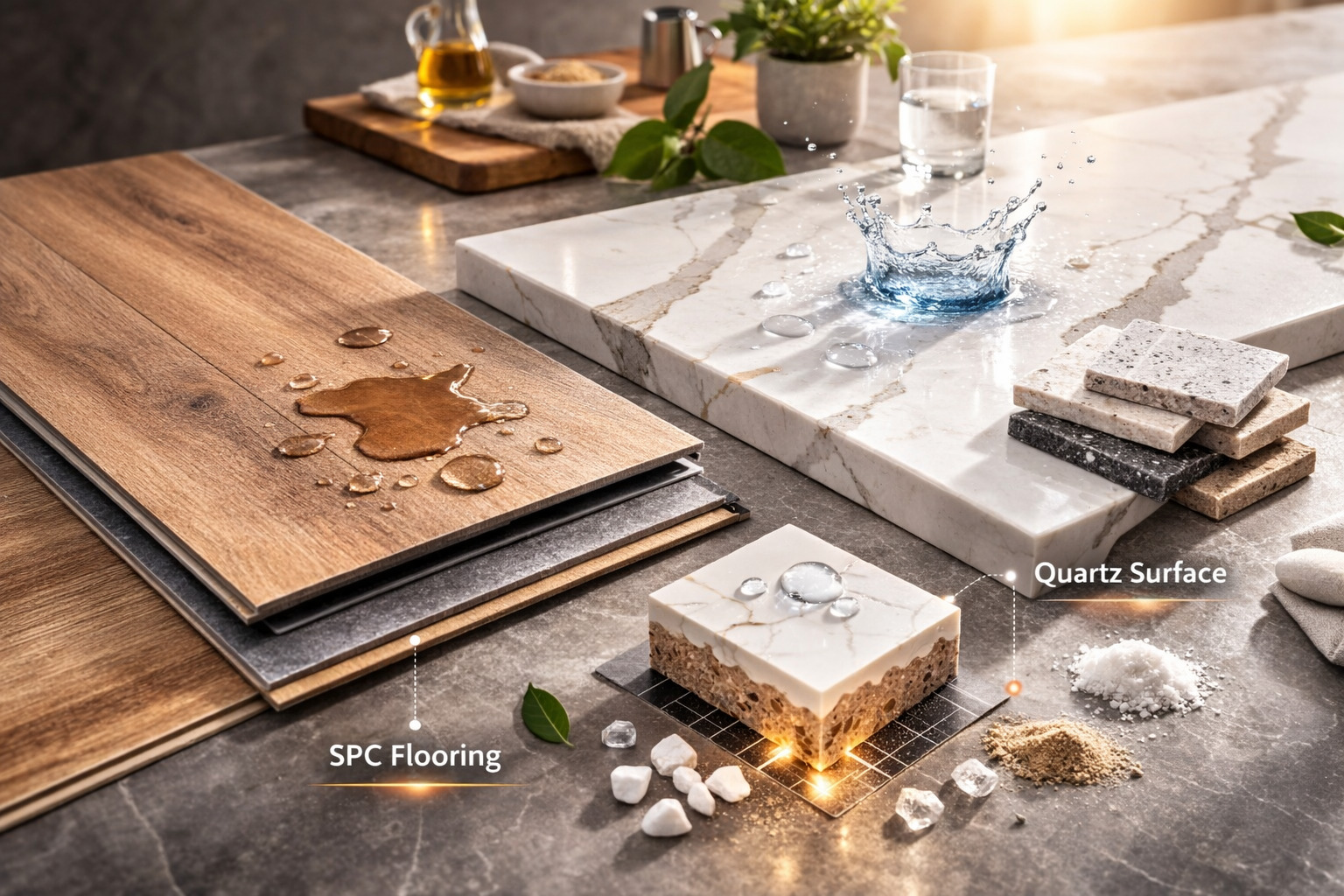
When choosing tiles for your home or commercial project, durability is often the most important factor. But did you know that tile porosity plays a huge role in how long your tiles last, how they resist water and stains, and how much maintenance they require? In this article, we break down everything you need to know about tile porosity and why it matters for your floors and walls.
What is Tile Porosity?
Tile porosity refers to the presence of tiny pores or spaces within the tile material. These pores can absorb water and other liquids, which affects the tile’s strength, durability, and maintenance needs.
Porosity is measured as a percentage of water absorption:
- Low porosity: <0.5% absorption – highly resistant to water
- Medium porosity: 0.5%–3% absorption – moderately resistant
- High porosity: >3% absorption – absorbs water easily, less durable
Most high-quality floor and wall tiles, such as vitrified or quartz-based tiles, have low porosity to ensure long-lasting performance.
Why Tile Porosity Matters
The porosity of a tile impacts several key aspects of its performance:
1. Water Resistance
Tiles with high porosity absorb more water, which can lead to staining, warping, or even mold growth over time. Low-porosity tiles, on the other hand, are highly water-resistant, making them ideal for bathrooms, kitchens, and outdoor areas.
2. Strength and Durability
Low-porosity tiles are denser and stronger. They are less likely to crack under heavy loads or impact, making them suitable for high-traffic areas. High-porosity tiles may be more fragile and prone to chipping.
3. Maintenance Requirements
Tiles with higher porosity require frequent sealing and careful maintenance to prevent water damage or stains. Low-porosity tiles are easier to clean and maintain, reducing long-term upkeep costs.
4. Stain Resistance
Porous tiles tend to absorb liquids like coffee, oil, or wine, which can cause permanent stains. Non-porous tiles prevent liquids from penetrating, keeping your surfaces looking pristine.
Types of Tiles by Porosity
Understanding the porosity of different tiles helps you choose the right one for each area of your project:
1. Vitrified Tiles
- Very low porosity (<0.5%)
- Extremely durable and water-resistant
- Suitable for both flooring and walls
2. Ceramic Tiles
- Medium to high porosity (0.5%–3%)
- Less durable than vitrified tiles
- Best for areas with lower foot traffic or walls
3. Porcelain Tiles
- Very low porosity (<0.5%)
- Highly resistant to water, stains, and wear
- Ideal for bathrooms, kitchens, and commercial spaces
How to Choose the Right Tile Based on Porosity
When selecting tiles, consider the following:
- Location:
- Wet areas (bathrooms, kitchens) → Low-porosity tiles
- Dry areas (bedrooms, living rooms) → Medium or low-porosity tiles
- Traffic:
- High-traffic areas → Dense, low-porosity tiles for durability
- Low-traffic areas → Medium porosity tiles may be sufficient
- Maintenance Preferences:
- Low-maintenance → Non-porous tiles
- Ready for frequent cleaning → Medium-porosity tiles can work
- Aesthetic Needs:
- Porous tiles may have a natural, textured look
- Non-porous tiles offer a sleek, glossy finish
Tips for Maintaining Tiles Based on Porosity
- Seal porous tiles regularly to prevent water absorption and stains
- Use mild cleaners to avoid damaging the surface
- Wipe spills immediately on high-porosity tiles
- Avoid abrasive tools that can scratch the surface
Proper maintenance can extend the life of your tiles significantly, especially if you choose the right porosity for your space.
Conclusion
Tile porosity is a critical factor that determines durability, water resistance, and maintenance requirements. By understanding porosity and selecting the right tiles for your project, you can enjoy floors and walls that are not only beautiful but also long-lasting.
Whether you’re renovating your home, designing a commercial space, or choosing tiles for a high-traffic area, always consider tile porosity before making a decision. Choosing the right tiles today will save you time, effort, and cost in the future.